

The 7 Biggest Opportunities for a Circular Economy in Germany

The circular economy is considered a key driver of competitiveness and resilience in German industry. A recent BDI study reveals for the first time the economic potential it holds—and identifies seven key opportunities.
Global competition and geopolitical tensions highlight just how dependent Germany is on imports for many key raw materials. The study “Growth, Competitiveness, and Resilience”, conducted by the Boston Consulting Group (BCG) on behalf of the Federation of German Industries (BDI), therefore examines the role a systematically implemented circular economy can play in reducing this dependence while simultaneously creating new value.
The circular economy refers to an economic model in which products and materials are used for as long as possible and to the highest possible standard. This includes circular product design, reuse, repair, remanufacturing, and high-quality recycling. The goal is to conserve resources, keep recyclable materials in circulation, and reduce the demand for new raw materials.
The study was presented in May 2026 at IFAT Munich. It examined the mobility, mechanical engineering, construction, energy, and textile sectors, which together account for approximately 62 percent of Germany’s value added.
Here Are the Seven Biggest Opportunities
1. Gross Value Added Could More Than Double
The circular economy’s contribution to German value added is still relatively small—in 2023, it amounted to around 60 billion euros. According to the study, however, gross value added from the circular economy could rise to as much as 125 billion euros by 2045. The majority of this potential stems from increased activities in the areas of reuse and remanufacturing, the expansion of high-quality recycling capacities, and specific efficiency levers in the five industrial segments examined.
2. Dependence on Imports of Key Raw materials Is Decreasing
Germany is one of the world’s three largest importers of raw materials. By 2045, recycling and reuse could replace between 20 and 40 percent of strategic raw material imports. For rare earths, import dependence could drop by up to 20 percent, and for battery materials, by up to 10 percent. Specifically, recycling in Germany could eliminate the need to import around 60,000 metric tons of lithium, nickel, manganese, cobalt, silver, and rare earths.
→ Learn more: Why Germany’s Security Starts With Recycling
3. Valuable Materials Remain in the Country
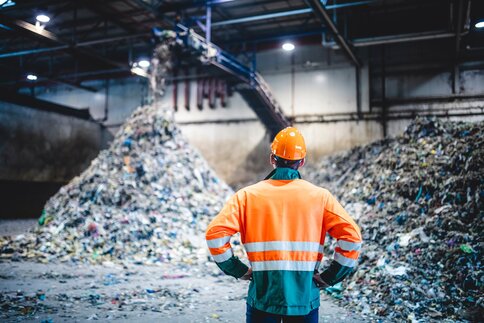
Within the EU, Germany is the economy with the highest material consumption—approximately 1.4 billion metric tons annually. By 2045, up to 83 million metric tons of recycled materials could be recovered annually, and key material flows could be kept within the country to a greater extent. This strengthens security of supply and reduces dependence on international supply chains.
4. New Export Opportunities for Environmental Technologies
The circular economy opens up growth markets with a global volume of over 150 billion euros. Sorting and recycling technologies play a major role in that. This is an area where the German mechanical engineering industry can leverage its technological leadership and tap into additional export potential.
5. Greenhouse Gas Emissions Are Declining
Circular strategies can significantly reduce emissions associated with materials. The BDI study concludes that approximately 11 million metric tons of carbon dioxide equivalents can be saved annually during the production and end-of-life phases.
6. The Energy Transition Is Becoming More Cost-effective
As the use of renewable energy expands, so too does the need for recycling and remanufacturing solutions. Recycling wind turbines and solar panels, as well as remanufacturing batteries, could save around 38 billion euros in Germany by 2045.
7. Companies Achieve Higher Margins
Remanufacturing and refurbishment models open up new business models. Products are used for longer, sold multiple times, or professionally refurbished. This creates additional sources of revenue while also allowing companies to tap into new customer groups.
What is Needed Now to Tap Into This Potential
Invest Approximately 20 Billion Euros
According to the study, one-time investments of around 20 billion euros will be required by 2045 to realize the potential described. The funds are to be allocated, among other things, to recycling infrastructure, refurbishment and remanufacturing capacities, IT systems, and research and development.
Many of the technologies required for this are already available and already being used industrially today. The key now is to accelerate their widespread adoption by creating the right political and economic framework conditions. Thanks to the additional value created, the investments could pay for themselves in macroeconomic terms within just a few years.
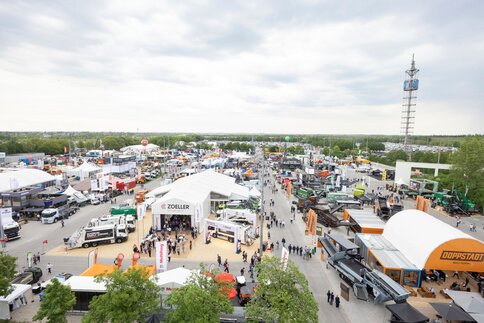
Discover Circular Economy Solutions at IFAT Munich
From smart sorting and recycling technologies to remanufacturing and digital solutions: At IFAT Munich, companies from around the world are showcasing how the circular economy is already being put into practice today
Increase Availability
To keep more materials in the cycle, recyclable material streams must be better tracked and put to high-value use. This includes circular product designs, standardized materials, greater data transparency, and more efficient sorting systems.
→ Learn more: 3 Innovative Approaches to Textile Recycling
Improve Utilization
Industry and policymakers must accelerate the expansion of modern recycling and remanufacturing methods. In addition to technological innovations, the study cites, among other things, faster approvals, investment incentives, and competitive energy prices as key prerequisites.
→ Learn more: 3 Exciting Startups in The Recycling Industry
Boost Demand
Companies should make circular products a more integral part of their portfolios. At the same time, public procurement can create targeted incentives to increase demand for recycled materials and remanufactured products.
Drive Digital Transformation Forward
Digital solutions support nearly every stage of the circular economy—from product design to sorting and recycling. However, small and medium-sized enterprises in particular need better conditions to be able to efficiently collect and use the data required for that.
→ Learn more: Innovative AI Applications in the Environmental Sector
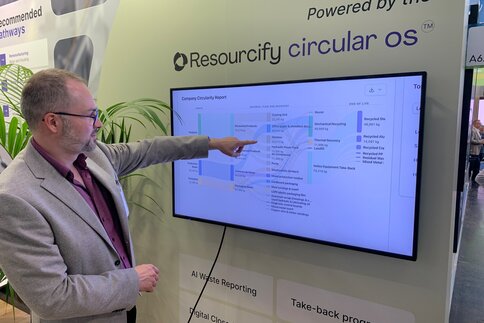
The circular economy strengthens Germany’s position as an industrial hub in two ways: It reduces critical dependencies and creates additional value in Germany.
Conclusion: The Circular Economy as a Competitive Advantage
The circular economy is increasingly becoming a competitive factor for Germany as an industrial hub. The study makes it clear that many of the necessary technologies are already available. The key question now is whether policymakers and the business community will create the necessary framework conditions so that this potential can actually be realized.
Holger Lösch, Deputy Chief Executive of the BDI, sums up the key message: “The circular economy strengthens Germany as an industrial hub in two ways: It reduces critical dependencies and creates additional value in Germany.” To achieve this, he says, investments in circular infrastructure must be accelerated, approval processes shortened, and markets for secondary raw materials systematically developed.
Would You Like to Read the Full Study?
You can find the study titled “Growth, Competitiveness, and Resilience: Opportunities for German Industry in the Circular Economy” on the BDI website. You can download it, share it, and read it online.