

Startup Success Stories: Tailwind for Newcomers to the Environmental Industry

From the Startup Area to main exhibitor: Three young companies are using IFAT Munich as a springboard and will present their innovations in 2026. A double win—for founders and visitors alike.
At IFAT Munich, innovative start-ups take center stage—and will once again bring a breath of fresh air to the world's leading trade fair for environmental technologies in May 2026. In the Startup Area, newcomers gain their first international trade fair experience, establish contacts with investors, and present their ideas to a global audience.
Many of these newcomers continue to grow rapidly. Some of those who started out in the Startup Area in 2024 will return as regular exhibitors in 2026. This shows that those who start out in the Startup Area can advance their business ideas and grow into established companies.
Advantage for visitors: They have the opportunity to experience some of the most exciting young companies in the environmental technology industry live - from their first pitch to their own regular booth.
Read the success stories of three startups here. The young entrepreneurs report on how their appearance in the Startup Area at IFAT Munich advanced their business idea - and what they have planned for the upcoming edition of the trade fair.
Highlights of the IFAT Munich Startup Area
With 50 to 60 international startups, exciting product presentations, and concentrated networking opportunities, the Startup Area at IFAT Munich offers a range of benefits to both exhibiting young companies and visitors.
By exhibiting in the Startup Area at IFAT Munich, we met many companies from all over the world and gained valuable market insights.

- Co-founder and Chief Marketing Officer
- Solar Materials
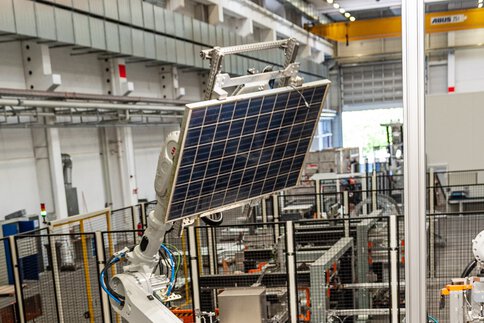
Solar Materials: Efficient recycling of solar modules
Conventional methods are hardly able to completely recycle disused solar modules. Valuable raw materials such as silicon or silver are lost in the process. This is exactly where Solar Materials comes in: using a patented thermomechanical process, the start-up recovers 98% of the materials – fully automated, without chemicals, and economically efficient. Since April 2025, the company has been operating the first industrial recycling line in Magdeburg with an annual capacity of 7,000 tons.
Mr. Franke, what has your “IFAT story” been like so far?
Fridolin Franke: In the first year after our founding, we visited the trade fair as guests. At the following IFAT Munich in 2024, we were represented with a booth in the Startup Area. And in 2026, we will be represented there as a “normal” exhibitor.
What experiences did you gain at IFAT Munich 2024?
Franke: We met many companies from all over the world and gained valuable market insights. It was very important for us to get a feel for the market and the interest in other countries. This significantly supported us in our growth strategy.
What are your goals for your trade fair appearance next year?
Franke: Recycling is very much about partnerships, i.e., cooperation with other recycling companies, organized logistics, and synergy effects in raw material extraction. In order to scale our business and expand into new markets, it is crucial for us to develop these relationships. As a key platform for the circular economy, IFAT Munich is ideally suited for this purpose
In a nutshell: Solar Materials
- Founders: Jan Bargel, Fridolin Franke, Dr. Jan-Philipp Mai
- Year founded: 2021
- Headquarters: Magdeburg, Germany
- Employees: 54
At IFAT Munich, we can quickly get in touch with relevant national and international contacts.

- Co-founder and Managing Director in Product Management & Sales
- Angsa Robotics
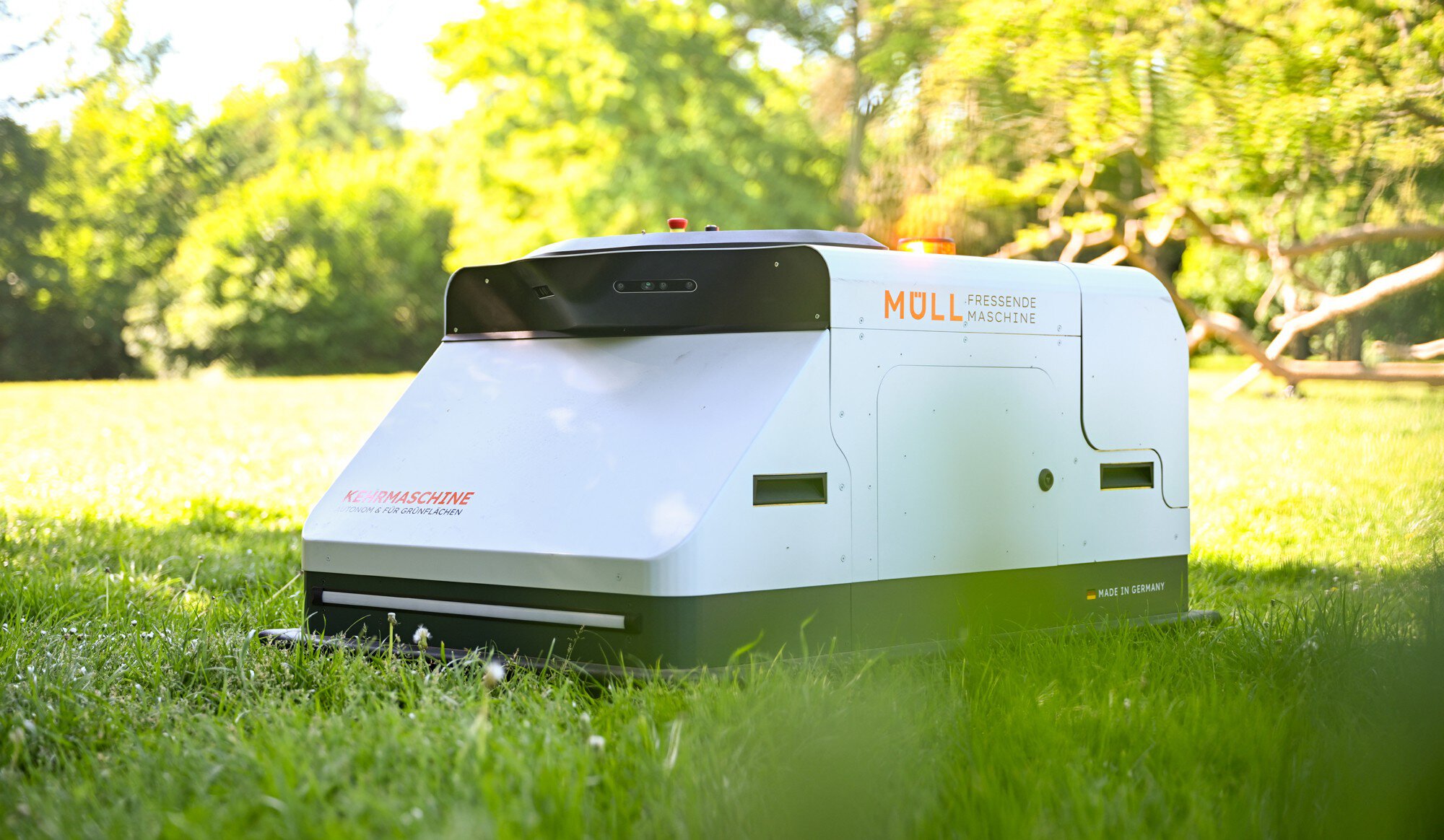
Angsa Robotics: Autonomous helper against cigarette butts and other litter
Bottle caps, plastic scraps, or cigarette butts: small pieces of trash on lawns and gravel areas are not only unsightly, but also difficult to remove. Angsa Robotics has developed an autonomous robot that uses a self-trained neural network to reliably detect and suck up trash—while ignoring leaves and twigs. The startup's devices are already cleaning public parks in ten German cities, and by 2026, their use is expected to grow to 50 municipalities in the DACH region.
Mr. Tariq, you participated in the coronavirus-related digital IFAT impact Business Summit in 2020 and have since been an exhibitor in the Startup Area at IFAT Munich twice. What has been your experience?
Bilal Tariq: At IFAT Munich, we can quickly get in touch with relevant national and international contacts. Representatives from all industries visit the Startup Area. It also paid off for us to get more involved in presentations and panel discussions at the last IFAT Munich—both in the Startup Area itself and outside of it at the VKU, the Association of Municipal Companies.
Municipalities are considered to be innovation-shy. Would you agree with that?
Tariq: No, we have actually found them to be quite innovative! However, good cooperation depends on the trust of those responsible in our company, for which direct, personal contact is important.
How do you want to organize your trade fair appearance at IFAT Munich 2026 and what are your goals?
Tariq: We will definitely participate as a main exhibitor. We are currently deciding whether to do this with our own booth or as a sub-booth of the VKU presentation. In terms of acquisition, we also plan to look for municipal customers in non-German-speaking Europe, with the Benelux countries and France appearing particularly interesting to us. We also want to identify potential users beyond the municipal sector and engage in dialogue with them.
In a nutshell: Angsa Robotics
- Founders: Philippo Rabast, Karl Schulz, Bilal Tariq, Lukas Wiesmeier
- Year founded: 2019
- Headquarters: Munich, Germany
- Employees: 20
Watch the video: Angsa Robotics in action
At IFAT Munich 2026, we will demonstrate how our customers use our technology in practice.

- Co-founder and managing director
- Greyparrot
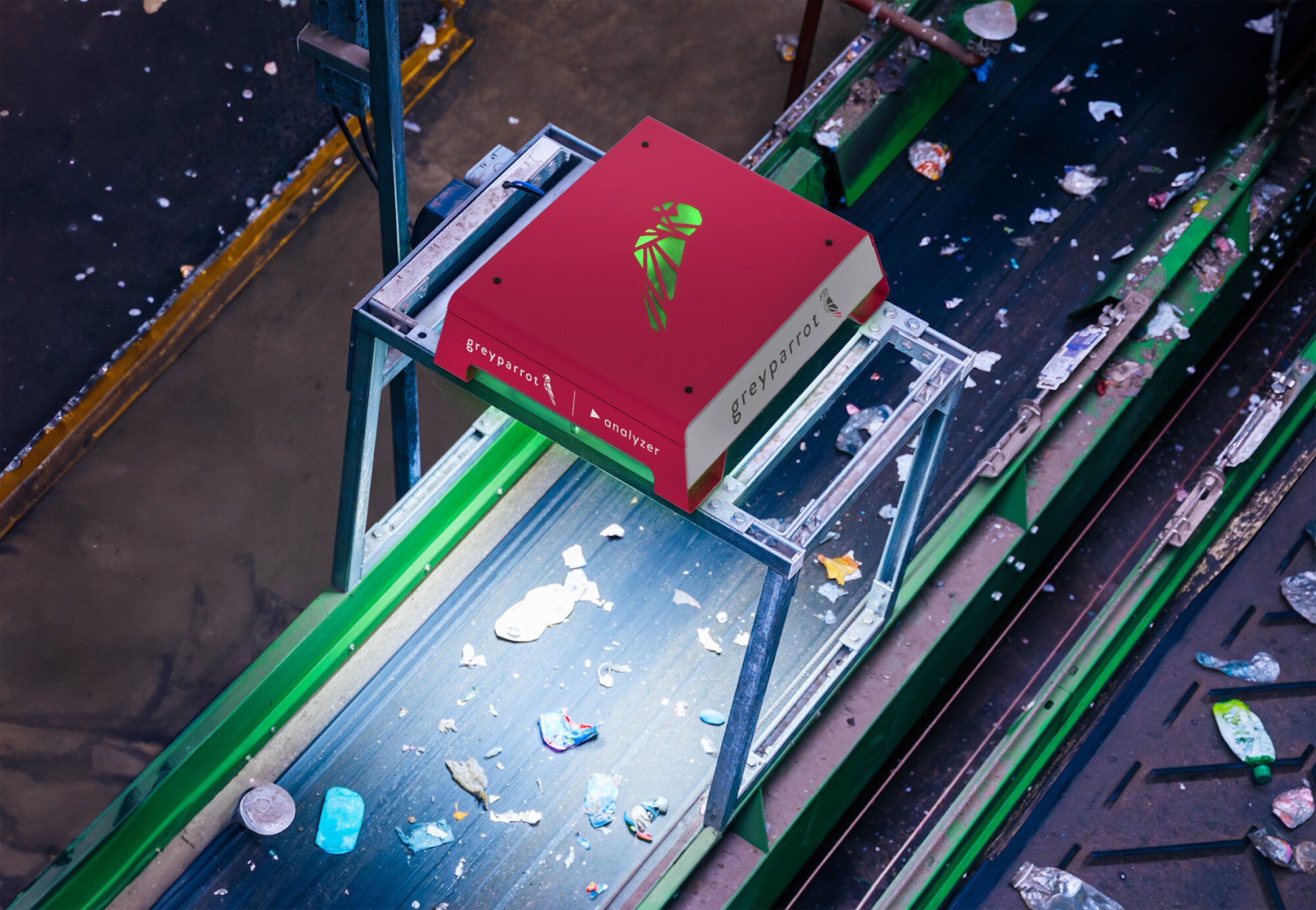
Greyparrot: AI optimizes waste sorting
British startup Greyparrot is bringing artificial intelligence to the global waste management industry. The Analyzer system captures images of waste in sorting facilities, which are analyzed by AI in real time. This allows materials to be identified more accurately and resources to be used more efficiently. In 2024, Greyparrot systems identified over 40 billion waste objects worldwide and enabled the recovery of an additional 125,000 tons of material. With its new AnalyzerWave platform, Greyparrot combines AI with near-infrared detection, and with its Deepnest platform, the company supports brand owners in sustainable packaging design.
Ms. Druckman, how many times has Greyparrot participated in IFAT Munich so far?
Mikela Druckman: In 2022, we were part of the Startup Area, and in 2024, we had a booth as a main exhibitor.
What were the most important goals for Greyparrot in each case?
Druckman: The first time we participated, the main goal was to increase our overall visibility and awareness in order to expand our market. At the following trade fair, we organized a happy hour at our booth and invited existing customers and prospects, which allowed us to connect with them and nurture those relationships.
What are your goals for IFAT Munich 2026?
Druckman: We will give visitors a closer look at the features and products we have launched since IFAT Munich 2024. We will also report on how our customers across the EU are using this technology in practice and operating more profitable recycling plants.
In a nutshell: Greyparrot
- Founders: Mikela Druckman, Ambarish Mitra, Nikola Sivacki
- Year founded: 2019
- Headquarters: London, UK
- Employees: 55
Startup Area: Added value for founders and visitors
The success stories show that the Startup Area at IFAT Munich is a springboard for young companies—and a highlight for trade fair visitors. Those who attend in 2026 will experience innovations up close and see how startups grow into industry players.