

Protecting Water and Sewer Systems: Why Resilience Is Becoming a Key Priority

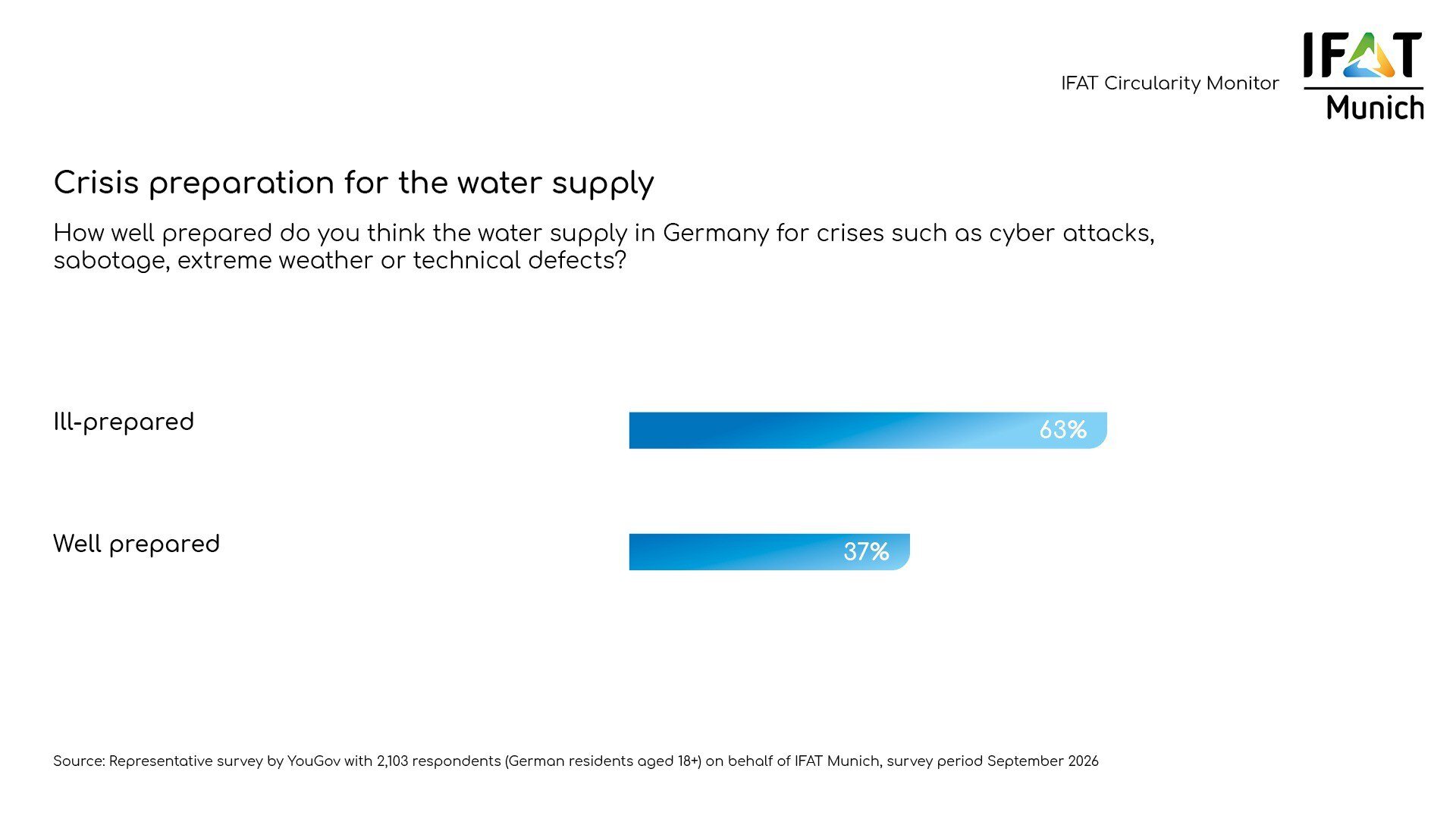
The IFAT Circularity Monitor shows that nearly two-thirds of respondents believe Germany is inadequately prepared for crises in water supply. That makes protecting critical water and wastewater infrastructure a key priority for supply security, the economy, and society.
| Key Points at a Glance | Significance for Water Management |
|---|---|
63% of those surveyed believe Germany is inadequately prepared for crises in the water supply. | Resilience continues to grow in importance. |
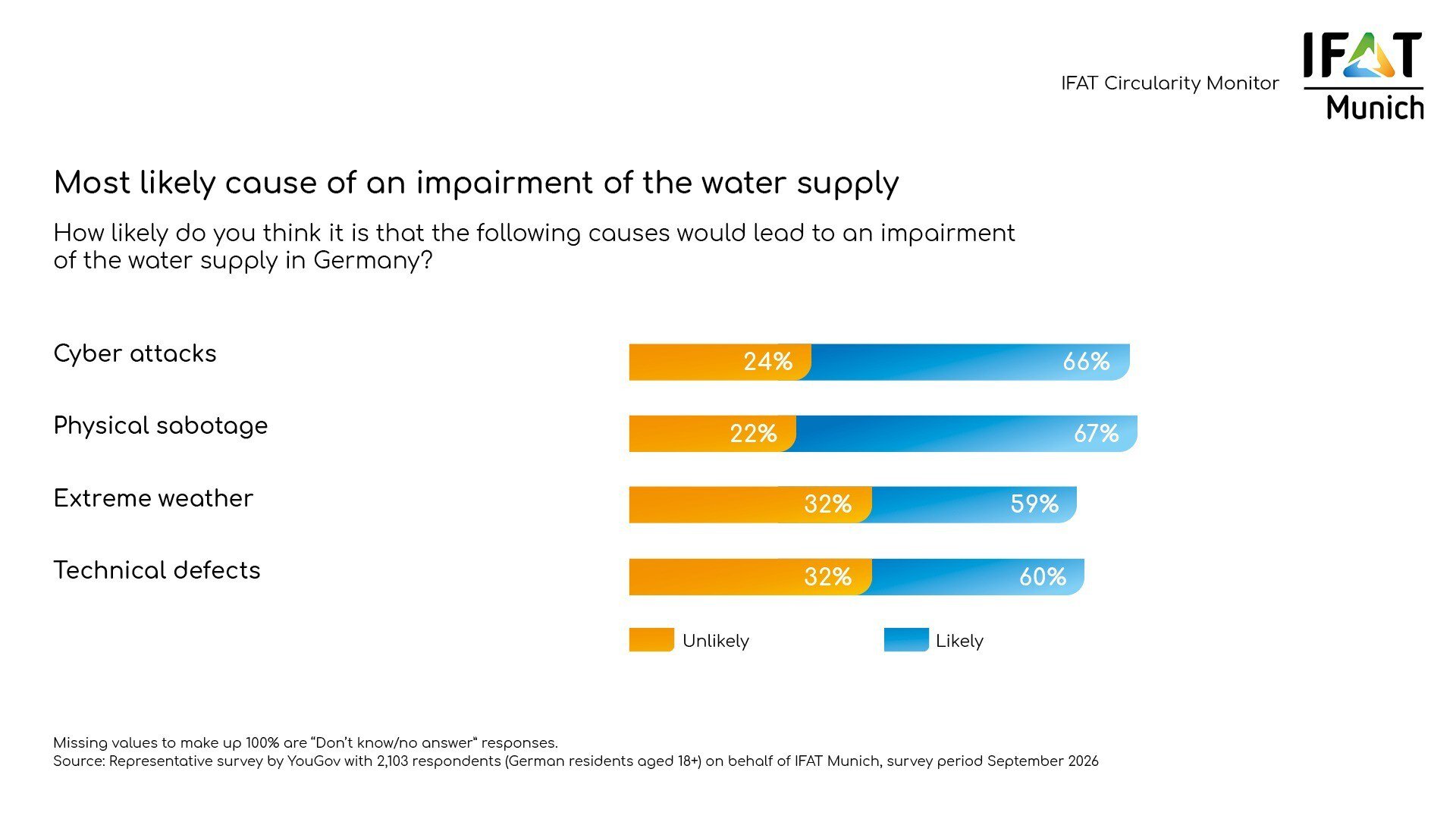
Physical sabotage and cyberattacks are perceived as the greatest risks. | Operators must take a holistic approach to security strategies. |
Extreme weather also remains a major challenge. | Climate adaptation and infrastructure planning go hand in hand. |
Wastewater treatment is recognized as systemically important infrastructure. | Investments in robust systems are becoming more important. |
Why Are Concerns About Water Infrastructure Growing?
Disruptions to critical infrastructure are a concern for the public, policymakers, and the business community alike. Events such as widespread power outages or targeted attacks on utility networks highlight just how closely energy, water, and wastewater infrastructures are interconnected.
The IFAT Circularity Monitor shows that targeted attacks on infrastructure, in particular, are perceived as a threat. 67 percent of respondents cite physical sabotage, and 66 percent cite cyberattacks, only then followed by extreme weather events.
This assessment clearly shows that supply security is increasingly viewed as a matter of national security.
What Are The Key Risks Facing Water and Wastewater Networks?
The results of the IFAT Circularity Monitor highlight three key risk areas:
- physical sabotage of critical infrastructure
- cyberattacks on digital control systems
- increasing extreme weather events resulting from climate change
According to Wolf Merkel, CEO of the DVGW (German Technical and Scientific Association for Gas and Water), supply security can no longer be viewed in isolation today. What is needed are integrated approaches that combine physical protection, cyber resilience, and climate adaptation.
At the same time, confidence in the quality and safety of the drinking water supply in Germany remains fundamentally high. The water industry is continuously investing in the protection and further development of its infrastructure.
→ See also:Germany's Security Starts at the Recycling Center
Why Does Wastewater Infrastructure Deserve More Attention?
While water supply is in the public spotlight, wastewater treatment often remains out of sight—even though it is essential for the environment, public health, and public safety.
According to the IFAT Circularity Monitor, 91 percent of respondents view disruptions to wastewater treatment as a serious threat. Extreme weather, physical sabotage, and technical defects are cited as the greatest risks.
For Lisa Irwin-Broß, Executive Board Member of the German Association for Water, Wastewater, and Waste (DWA), the results underscore the importance of high-performance wastewater treatment plants as systemically critical infrastructure. At the same time, they show that public awareness of these issues is growing.
How Can Critical Water Infrastructure Be Made More Resilient?
Resilience is built through the interplay of various measures. These also include:
- robust and redundant infrastructure
- emergency and crisis preparedness
- protection against cyberattacks
- modern monitoring and control systems
- climate-adapted planning and investments
That makes protecting critical water infrastructure a shared responsibility of operators, industry, local authorities, and policymakers.
Wolfgang Ischinger, former chairman of the Munich Security Conference, also views this as a key security policy challenge. In the spirit of “Green Defense,” he believes that the resilience of sustainable infrastructure must become a more integral part of national security strategies in the future.
→ See also: How the Sponge City Principle Makes Cities More Resilient.
What Role Does IFAT Munich Play?
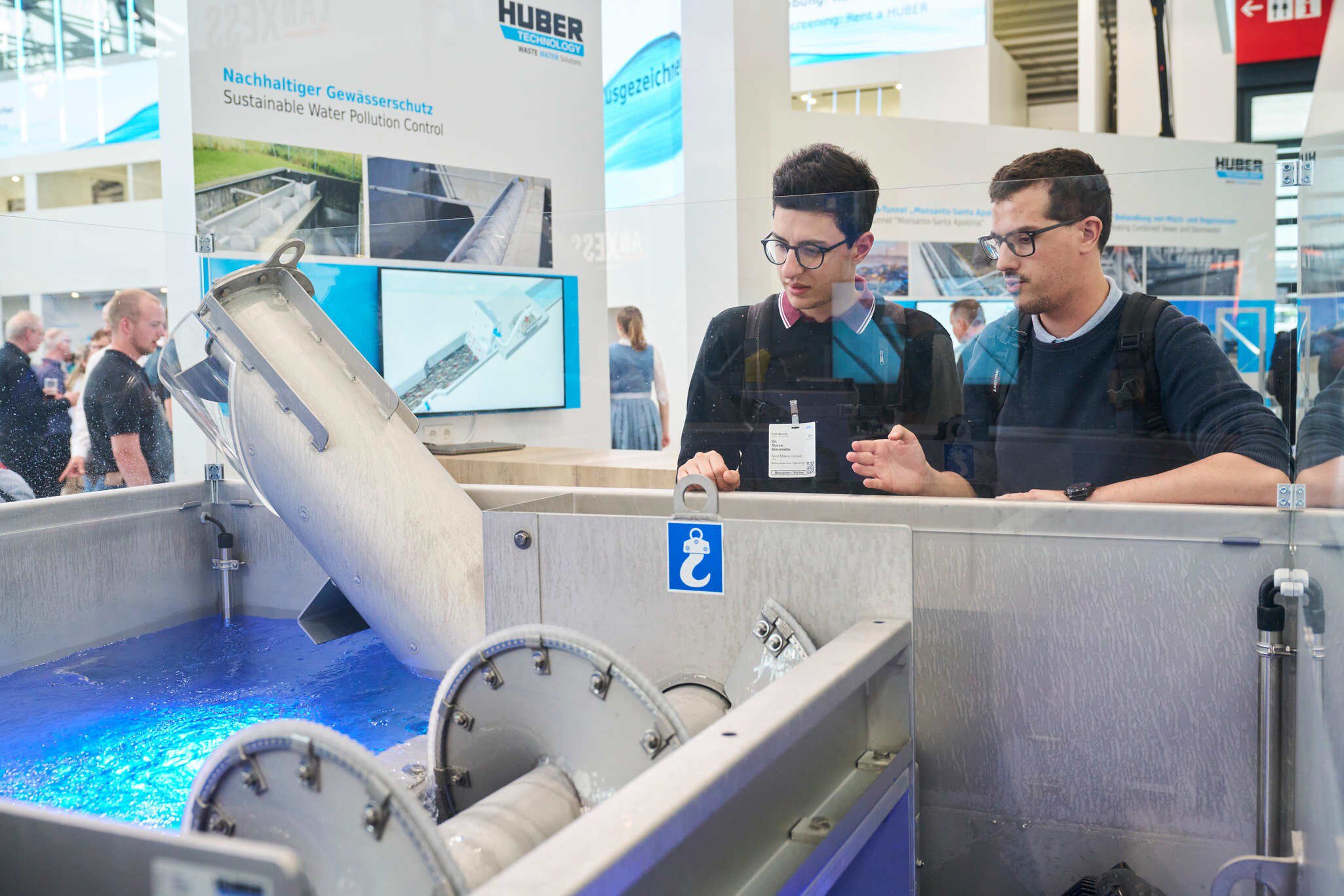
At IFAT Munich, companies, research organizations, and institutions will demonstrate how water and wastewater infrastructure can be made more resilient.
The focus is on technologies and solutions for:
- the protection of critical infrastructure,
- cyber resilience,
- climate-resilient water management,
- modern water and wastewater technology,
- and digital infrastructure management.
Take this opportunity to discover innovative solutions and engage with experts from around the world.
→ Learn more: Technological Solutions at IFAT Munich
FAQ
Because they ensure the supply of goods and services to the population and the economy, and are essential for health, the environment, and public safety.
Above all, physical sabotage, cyberattacks, and extreme weather events.
In general, the drinking water supply continues to enjoy a high level of trust. At the same time, operators are continually investing in its resilience against new threats.
It protects waterways, the environment, and public health, and is an indispensable part of public services.
IFAT Munich showcases technologies and concepts for resilient water and wastewater systems, cybersecurity, digitalization, and climate-resilient infrastructure.
The demands on water and wastewater networks are growing. In addition to the impacts of climate change, security issues are also coming into sharper focus. This makes innovative technologies, resilient infrastructure, and professional exchange all the more important.
IFAT Munich brings together international experts, companies, and decision-makers to develop solutions for a safe and sustainable water management system.