

Water-conscious urban development:
6 answers to the most important questions

Climate change, urbanization, and extreme weather events are demanding new solutions for our urban living environment. The sponge city concept will also play an important role at the upcoming IFAT Munich. Read the answers to the most important questions here today.
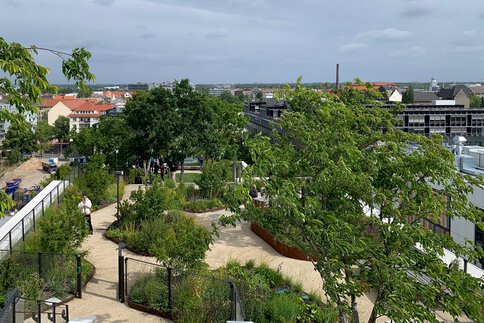
What is a water-conscious city?
“A water-conscious city is planned, structured, and operated in such a way that it understands water as both a resource and a design element”, explains Dr. Lisa Irwin-Broß. According to the executive director of the German Association for Water, Wastewater, and Waste (DWA), such a municipality combines flood prevention, water supply, climate adaptation, quality of life, and resource efficiency in an integrated system.
Why do we need water-conscious cities?
The Intergovernmental Panel on Climate Change (IPCC) assumes that climate change will cause extreme weather events such as floods, droughts, heat waves, and storms to occur more frequently and with greater severity in the coming years. Cities and municipalities are particularly vulnerable due to their high concentration of people, economic activity, and infrastructure. To minimize the risks, local authorities around the world are being called upon to prepare for the consequences of the climate crisis.
How do water-conscious cities work, and why are they also referred to as sponge cities?
Water-conscious cities absorb as much rainwater as possible through green zones, wetlands, water and floodplains, and above-ground and underground storage areas, instead of draining it into sewers and receiving waters. In this way, they resemble a sponge that soaks up water.
For example, a playground can be designed in such a way that rainwater is directed to it during heavy rainfall and seeps away there.
"In order to increase the possibilities for infiltration, sealed areas must be unsealed and appropriate open spaces must be planned for in construction projects. Since open spaces are rare in cities, they should be used for as many purposes as possible. For example, a playground can be designed in such a way that rainwater is directed to it during heavy rainfall and infiltrates there," explains Dr. Friedrich Hetzel, head of the DWA's Water-Conscious Spatial and Settlement Development Unit.
Such measures make it possible to mitigate the effects of storms and store rainwater for subsequent dry periods. This precious resource can then be used to keep trees and green spaces alive, which, together with green roofs and facades, contribute to cooling and improving the air quality in the city.
“Water-conscious cities” in the event program for IFAT Munich 2026
- Spotlight Area “The Water-Conscious City of the Future” in the West Entrance Area: The DWA and the German Technical and Scientific Association for Gas and Water (DVGW) will be showcasing what is already possible today in terms of climate-resilient urban development and sustainable drinking water supply.
- Innovation Forum “Water-conscious (re)building of cities” on the Blue Stage in Hall B2, also organized by DWA and DVGW.
- Panel discussion and expert session on May 7 on the Blue Stage, both directed by DWA.
Why are sponge city concepts not yet being implemented across the board?
The following factors are hindering progress:
- Fragmented administrative responsibilities: Water management, urban planning, parks departments, transportation, civil engineering, and building inspection often work alongside each other rather than in an integrated manner. There is often a lack of overall coordination.
- Inadequate legal framework: Many building code regulations are still based on traditional drainage systems. In many municipalities, there is no obligation to retain or infiltrate rainwater on private property. In this context, the DWA is calling for water-conscious urban development to be enshrined in the Building Code as a standard for urban land-use planning.
- Higher costs: Investments in so-called blue-green infrastructure pay off in the long term, but in the short term they incur higher costs than conventional drainage. In addition, there is currently a lack of comprehensive, reliable, and long-term support programs for municipalities and private owners.
- Lack of space and competing uses: Infiltration areas, retention areas, and green streets require space that would otherwise be used for parking, traffic, or development.
What environmental products and solutions are needed to create a water-conscious city?
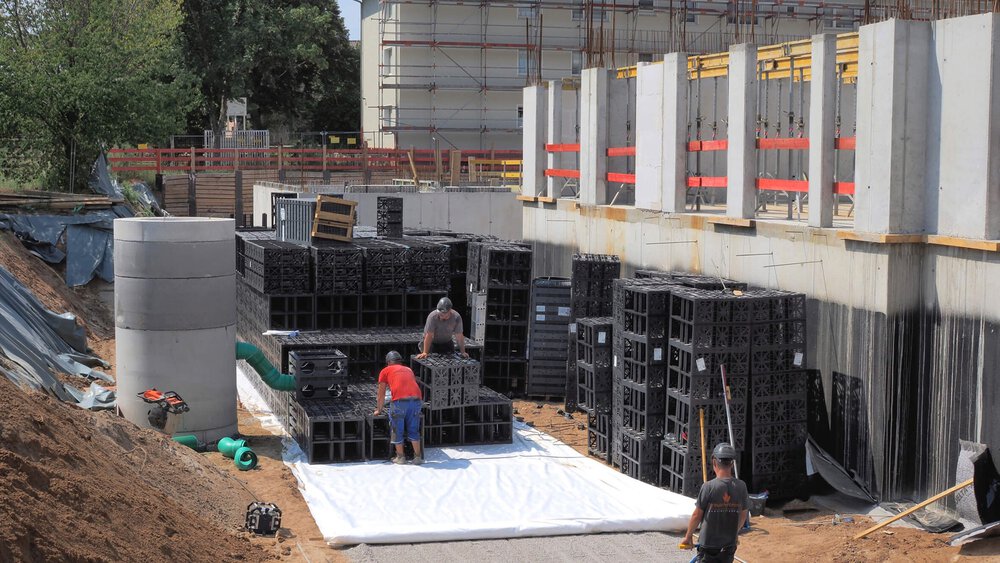
Examples include rainwater storage tanks made of various materials, infiltration trenches, infiltration boxes, pumps, filters, water-permeable ground reinforcement systems, level and flow sensors, programs for dimensioning infiltration systems, gray water recycling solutions, small sewage treatment plants, IoT water quality monitors, mobile flood barriers, and fog and evaporative cooling systems.
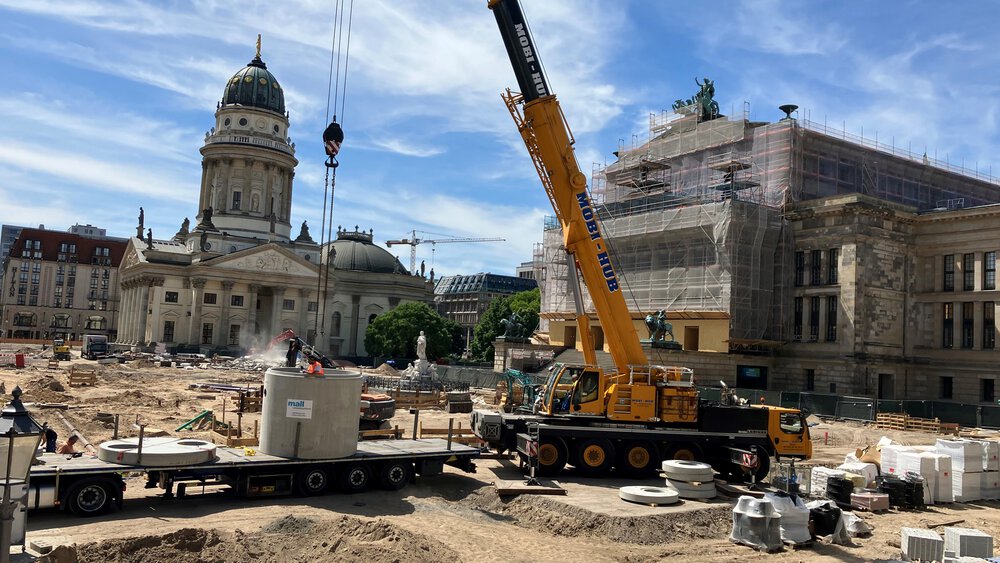
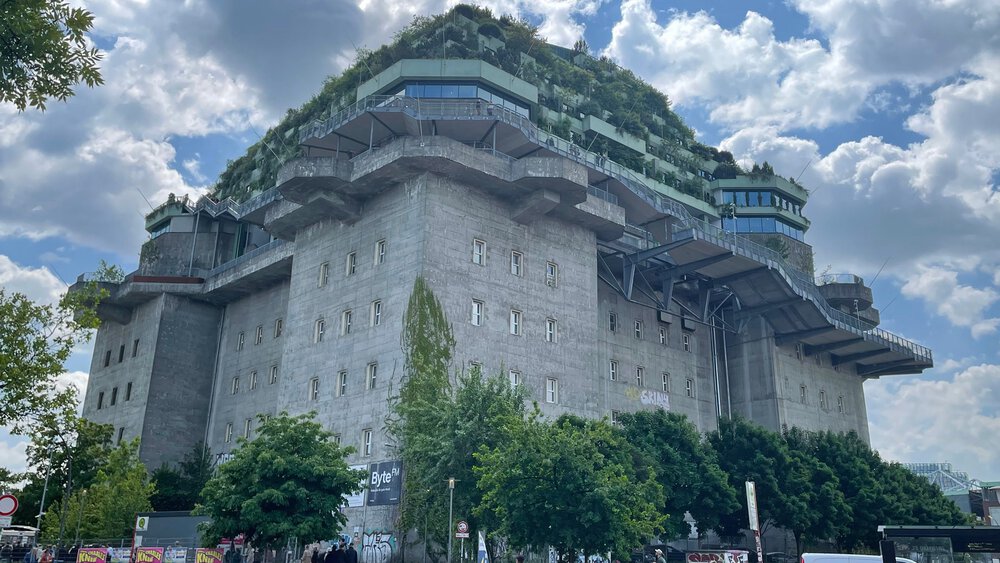
What are some current examples of projects from water-conscious cities?
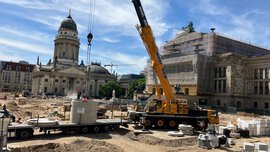
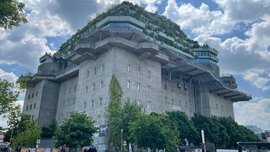
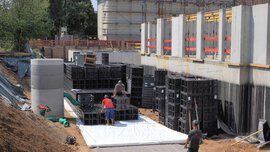
Click through the image gallery to view the examples.
Solutions for sponge cities at IFAT Munich 2026
Resilience & adaptation of water management to climate change: Find suitable exhibitors at IFAT Munich 2026 here.