

5 Key Challenges in Battery Recycling—and Appropriate Solutions

From battery design to the recovery of high-quality secondary raw materials: Decisions made at many points along the value chain will determine how efficiently and cost-effectively battery recycling can operate in the future. Here is an overview of the five biggest challenges.
The demand for suitable solutions in the field of battery recycling is growing, not least due to the rise of electric mobility. According to estimates by the Fraunhofer Research Institute, battery returns will triple by 2030, and their variety will increase. Consequently, recycling companies must begin adapting their processes now to handle larger and more complex material streams.
For battery recycling to evolve from its current, often small-scale operations into a high-performance industrial system, technical, logistical, and economic hurdles must be overcome. The following five challenges are particularly critical in this regard:
1. Complex and highly diverse battery designs
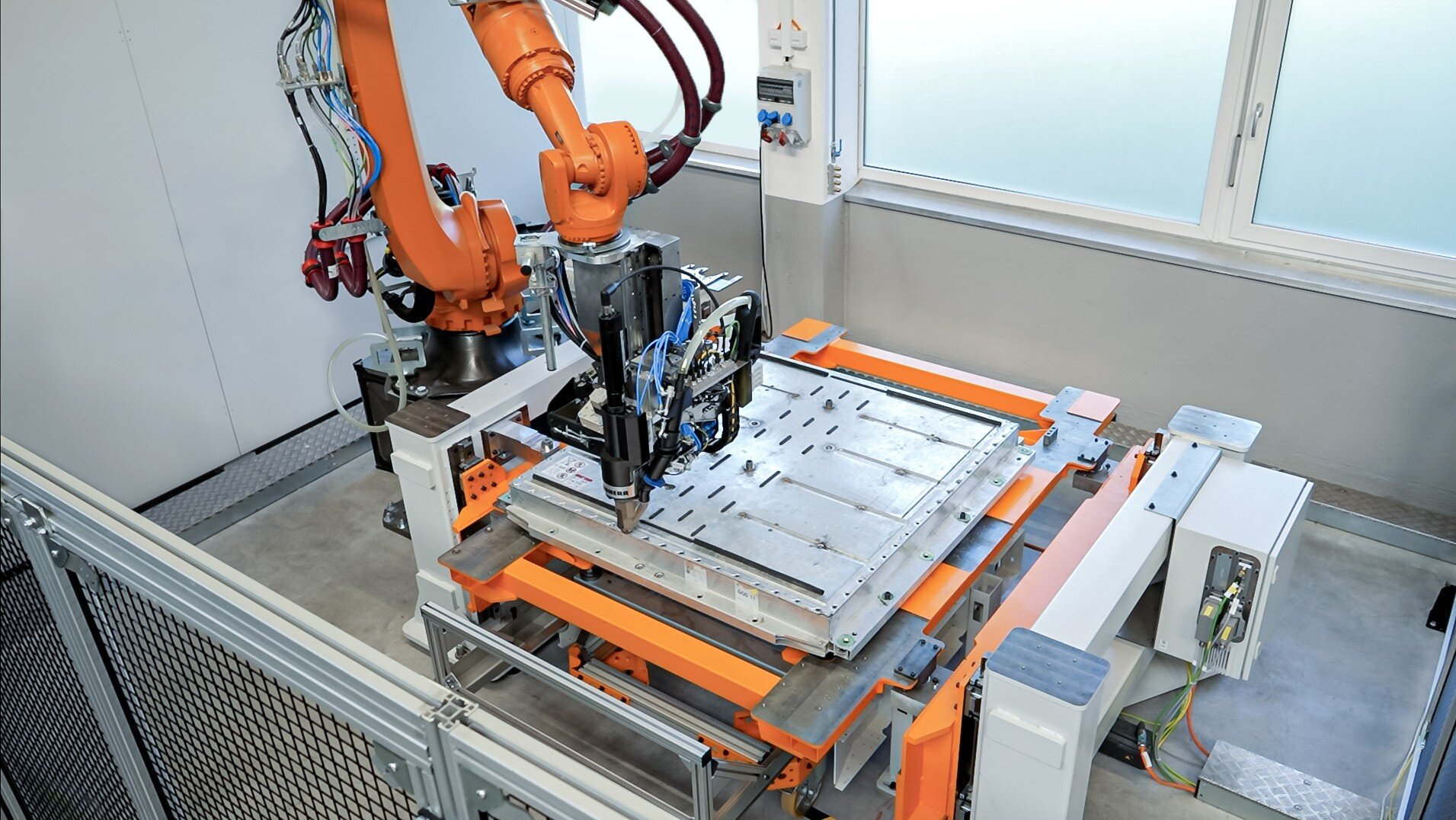
Battery packs vary significantly in cell format, design, connection technology, and material composition. “When it comes to building disassembly and recycling facilities, the wide variety of high-voltage battery types in particular poses a significant technical and economic challenge,” explains Daniel Reischmann, Technical Sales Engineer at Liebherr in the Automation, E-Mobility / Battery & Technology Solutions division.
It is essential, especially for the transition from today’s pilot and small-scale production processes to industrial battery recycling, to consistently consider the end-of-life phase as early as the battery development stage—keyword Design for Recycling. “However, scaling up battery recycling requires a comprehensive industrial concept that integrates battery design, return logistics, data availability, safety, disassembly, and material recovery,” Reischmann emphasizes. Automated and manual disassembly are not competing approaches here, but rather complementary building blocks for reducing effort and costs.
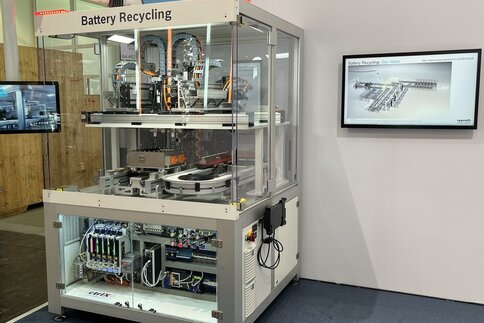
This topic was also addressed by exhibitors at the IFAT Munich in May 2026. For example, Bosch Rexroth presented a scalable comprehensive concept for recycling battery packs in electric vehicles. To achieve that, the company applies established manufacturing principles to the specific requirements of disassembly and material recovery. Automated processes minimize human intervention during critical phases such as disassembly and discharge.
2. Evolving Battery Chemistry
Recycling processes must be capable of handling different cathode chemistries, such as lithium nickel manganese cobalt oxide (NMC), nickel cobalt aluminum (NCA), or lithium iron phosphate (LFP). Recycling LFP batteries, in particular, is economically challenging: They contain neither nickel nor cobalt, so processing costs often exceed the value of the recovered raw materials.
“As battery chemistry increasingly shifts toward systems with lower metal content, developing downstream markets for secondary materials is becoming essential,” emphasizes Hannah Mittag, a research associate at the Fraunhofer Institute for Battery Cell Research and Production (FFB) in Münster.
Cross-Industry Session at electronica 2026
How can the recycling of lithium-ion batteries be made efficient, safe, and cost-effective on an industrial scale? That is the focus of the Cross-Industry Session at IFAT Munich on November 11 at electronica, the world’s leading trade fair for the electronics industry (November 10–13, 2026, Messe München).
Experts from BHS Sonthofen, Liebherr, and the VDMA will address three key questions:
- Raw material recovery: Which technologies enable the efficient recovery of critical raw materials?
- Safety: Which safety concepts have proven effective in practice?
- Economic viability: How can battery recycling be operated economically on an industrial scale?
The program:
- Panel discussion: Expert insights into technologies and safety concepts for industrial battery recycling
- Deep dive: Technical exchange with the speakers and discussion of specific challenges
- Networking: Cross-industry networking along the battery value chain
This session brings together experts from the electronics, battery, and recycling industries to develop new perspectives and collaborative solutions for a functioning circular economy.
3. Elaborate Recovery Process With High Purity
Recovering lithium, nickel, cobalt, manganese, copper, aluminum, and graphite as completely as possible and in a quality suitable for batteries is technically challenging. “Pyrometallurgical processes are robust but energy-intensive. Lithium, in particular, often ends up initially in the slag and must be recovered in additional process steps,” explains Karl Rottnick, a specialist in waste and recycling technology at the German Engineering Federation (VDMA). According to him, although hydrometallurgical processes allow for higher recovery rates, they require chemicals and generate process wastewater. “Direct recycling, as a third option, could preserve active cathode materials particularly efficiently, but is still predominantly found on a pilot scale,” adds Rottnick.
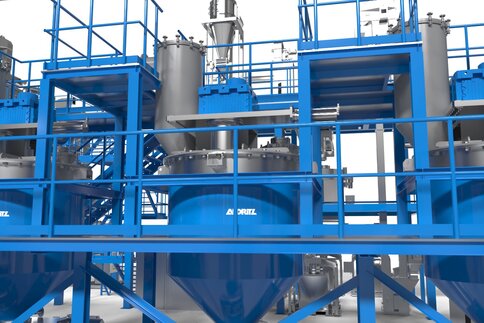
As one of the possible process components, the technology group ANDRITZ presented a new Helix dryer at IFAT Munich 2026. The vacuum drying system efficiently and safely removes both low- and high-boiling-point solvents from heterogeneous, crushed battery material. This results in a high purity of the recovered black mass, the most important intermediate product in the recycling of lithium-ion batteries.
4. Collection, Transport, and Safety
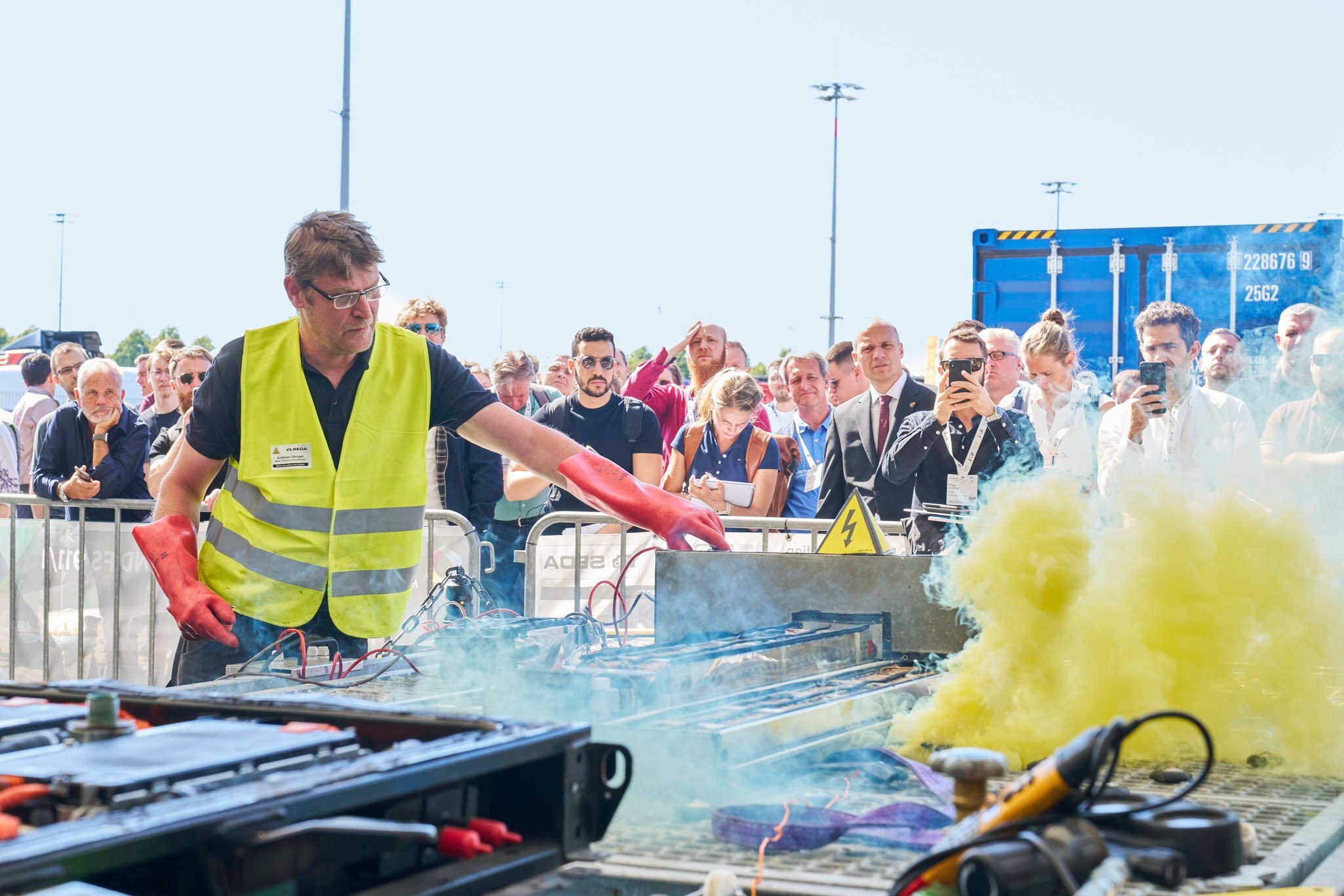
Used batteries are not ordinary waste. Damaged or partially charged lithium-ion batteries can cause fires and thermal runaway.
→ see also: Battery Fires: A Hot Topic in Waste Management
Collection, storage, and transport therefore require special safety measures. Added to this is the logistical challenge of reliably collecting large quantities of used vehicle batteries and delivering them to recycling facilities. “Here, standardized packaging and transportation systems, combined with regional collection centers, can reduce logistics costs and improve the safe handling of used batteries,” says Hannah Mittag.
5. Cost-Effectiveness and Sufficient Recycling Capacity
Recycling facilities require significant investment and material flows that are as continuous as possible. In this context, Karl Rottnick points out that not every battery enters the recycling process immediately. “Many traction batteries can initially be given a second life in stationary energy storage systems after their use in vehicles, which shifts the timing of the availability of recycling material,” says the VDMA expert.
At the same time, prices for lithium, nickel, and cobalt fluctuate considerably. Falling raw material prices can make recycling less attractive. In addition, high energy, labor, and financing costs can further strain profitability. In Europe, there is the added factor that recycling capacities are currently being built up, while larger quantities of end-of-life electric vehicle batteries will, in some cases, only be generated in the coming years.
Part of the Solution: Establishing Appropriate Guidelines for Circularity
Ultimately, recyclability is key to addressing all these challenges. In the future, battery recycling will not be measured solely by whether valuable metals are recovered, but by whether the resulting raw materials are of a quality that allows them to be used directly in new batteries. The EU Battery Regulation reinforces this approach through requirements for recycling efficiency, material recovery, and mandated recycled content percentages in the future. In addition, digital battery passports are intended to provide transparency regarding origin, composition, and sustainability metrics, thereby facilitating recycling processes.