

Circularity as a strategic factor for Europe's future
Circularity is more than just environmental policy: it links waste management and water infrastructure and, in times of geopolitical uncertainty, has become a matter of resilience, security of supply and competitiveness. IFAT Munich highlights the strategic importance of closed material and water cycles for Europe's future.

„Circularity is a must!“ – why circularity is becoming strategic
Circularity has evolved from a primarily environmental concept into a decisive factor for economic resilience. Geopolitical tensions, fragile supply chains and growing resource dependencies underline how closely competitiveness and security of supply are linked. It is becoming increasingly clear that circularity is indispensable for Europe’s future. In other words: circularity is a must!
IFAT Munich addresses these interconnections and explores circularity from a security, economic, and business perspective. The focus is on how closed material and water cycles strengthen resilience and safeguard strategic autonomy.
These topics will also be discussed in dialogue formats, including on the Green Stage at IFAT Munich 2026.
"Raw materials are instruments of power"
Dependence means vulnerability. When we recover rare earths from old appliances instead of importing them at high cost, we strengthen our technological sovereignty. When we keep steel, aluminium and copper in circulation, we make ourselves resilient to market distortions. Green defense means that the circular economy becomes a factor in geopolitical stability.

- former ambassador
5 Facts on Green Defense
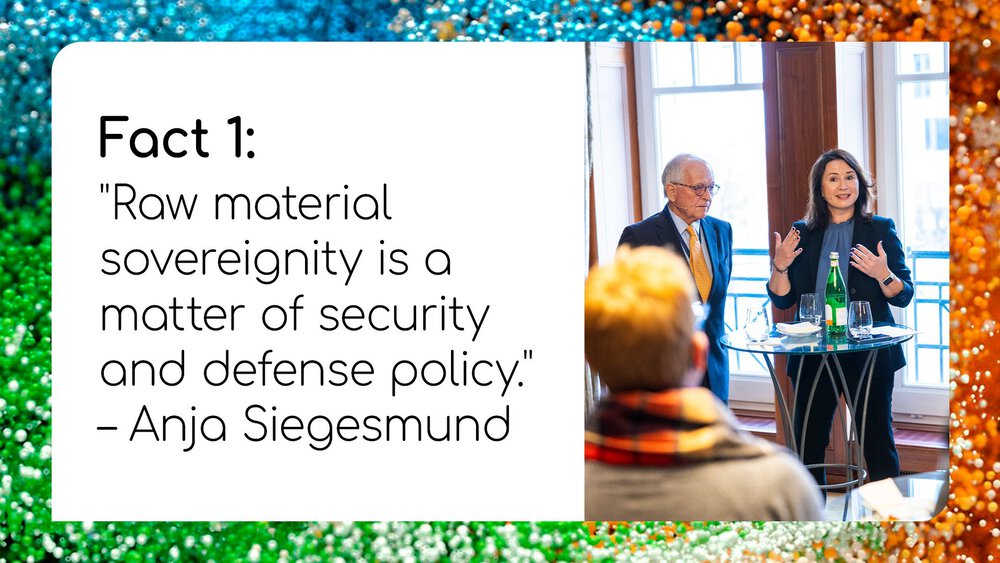
Ensuring the security of raw materials is about more than just the economy. In times of geopolitical tensions and fragile supply chains, the circular economy is becoming an increasingly important focus of security and industrial policy. At the SZ Economic Summit, our lunch session with Anja Siegesmund and Wolfgang Ischinger demonstrated why circular systems are becoming a central building block of resilience, competitiveness, and strategic capacity to act.
Read 5 facts to learn more about the role of the circular economy as the key to green defense.







Green defense in the economic policy debate
The debate around green defense shows that circularity is increasingly being recognised as an integral part of economic policy strategies. Closed (raw) material cycles are no longer viewed merely as an environmental measure, but as a tool for strengthening supply chains and reinforcing industrial sovereignty.
At the SZ Economic Summit, Anja Siegesmund and Wolfgang Ischinger discussed how the circular economy helps reduce dependencies beyond environmental considerations and underscores the security and industrial policy dimension of raw-material cycles. In exchanges with leading representatives from politics, industry and civil society, it became clear that circular solutions are increasingly seen as an important lever for reducing dependencies, strengthening Europe’s strategic autonomy and securing its long-term competitiveness.
The ideas emerging from these discussions will feed into IFAT Munich 2026, where this cross-sector dialogue will continue and be translated into concrete technological solutions.
Study by IFAT Munich: What the Germans think about circularity
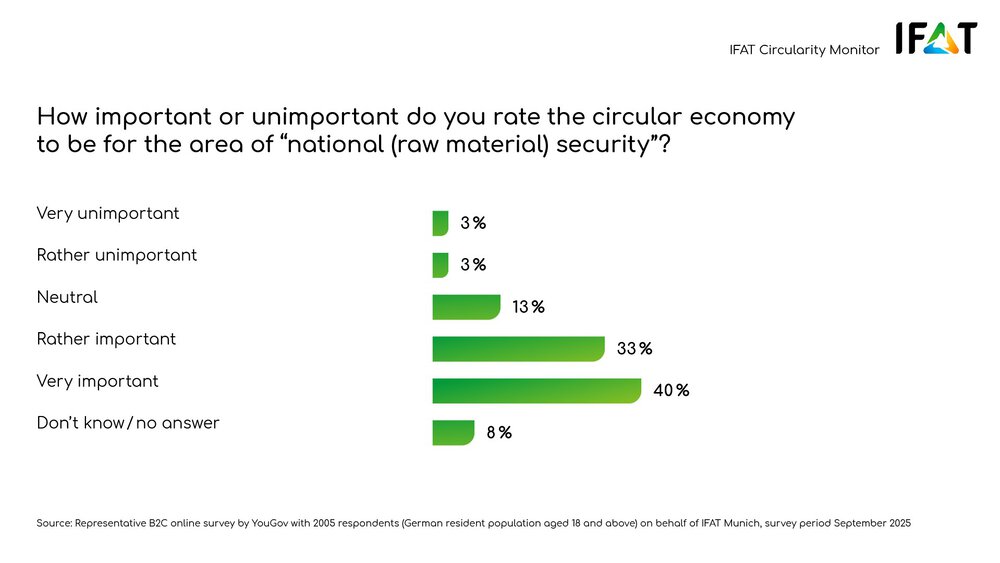
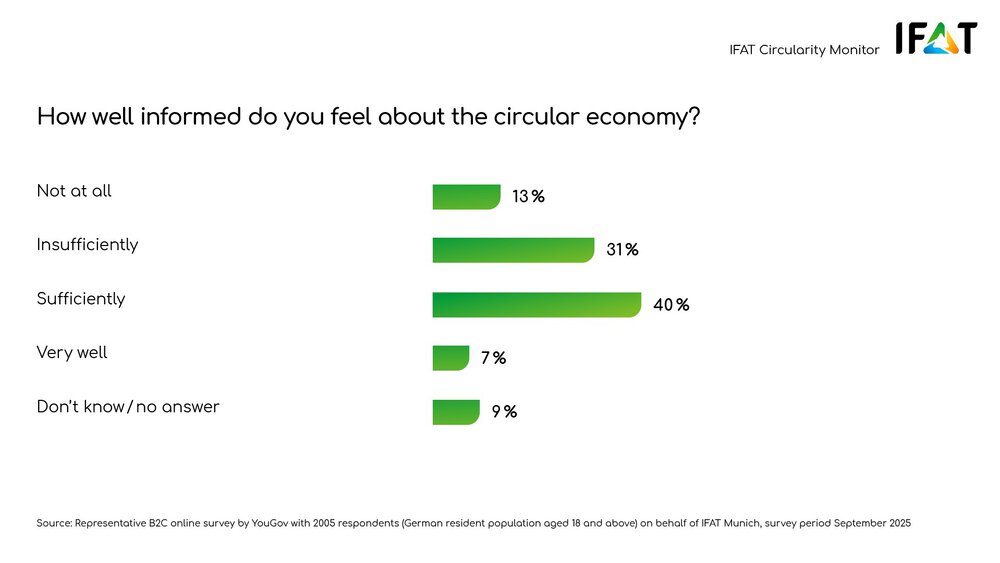
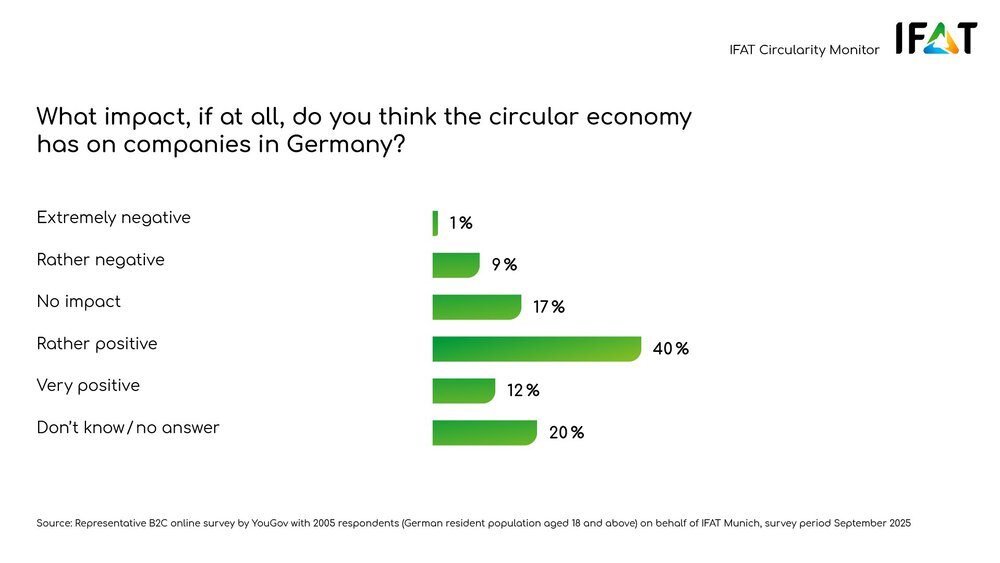
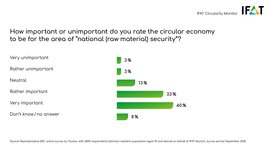
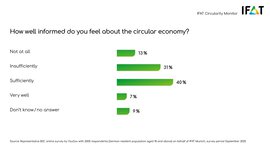
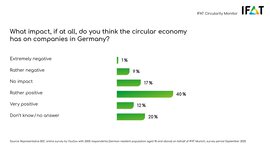
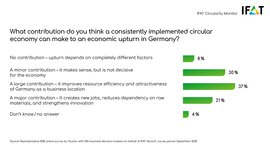
For many people in Germany, the country's ressource security begins at the recycling centre – as shown by the IFAT Circularity Monitor, a representative YouGov survey commissioned by IFAT Munich:
- 73% of Germans consider the circular economy to be important for national resource security,
- and more than half see it as a driver of economic growth.
- At the same time, 83% say they still feel poorly or only moderately informed about the topic.
The results show that awareness of the issue is high – but concrete strategies, technologies and political frameworks are needed to truly strengthen resilience. This is exactly where IFAT Munich comes in – as a platform where solutions for closed material and water cycles can be showcased and discussed.
See the detailed results of the study here.

“Green defense as a stability strategy”
The circular economy is no longer an optional sustainability initiative, but a strategic necessity. Closed material and water cycles increase resilience against external shocks and help ensure long-term competitiveness.

- Exhibition Director IFAT Munich
Study by IFAT Munich: Germans see water and wastewater networks at risk
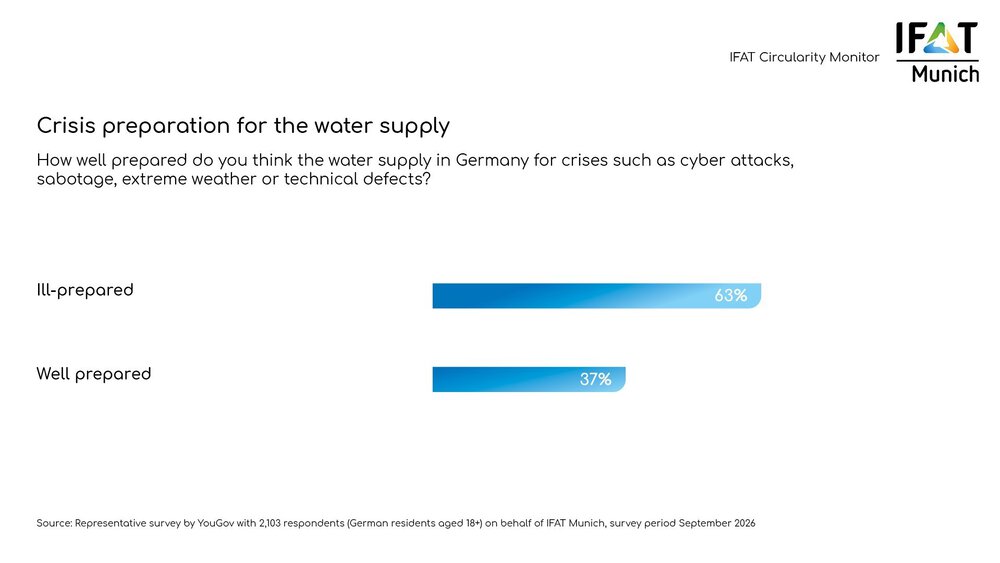
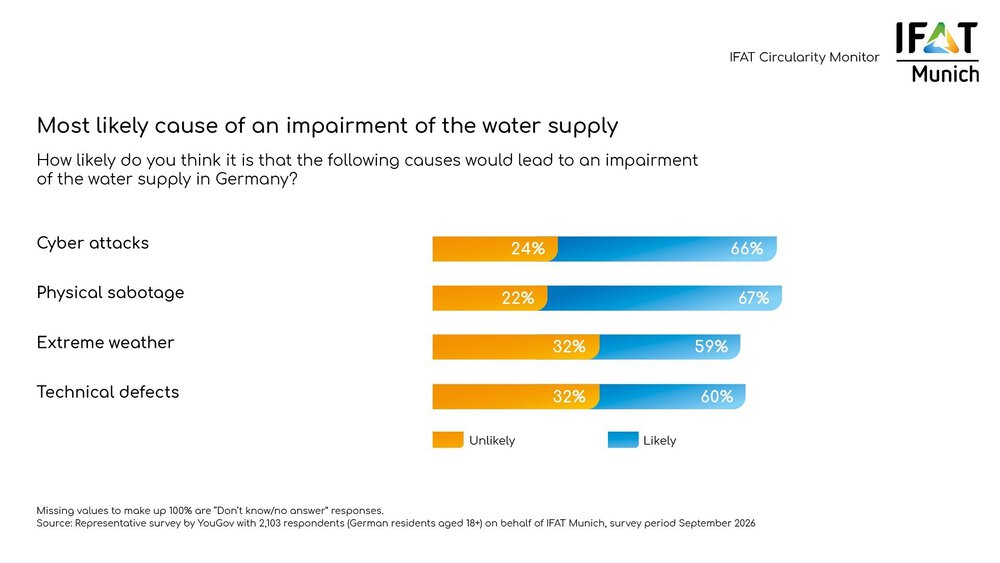
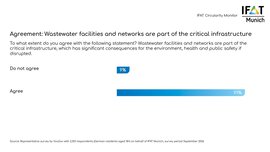
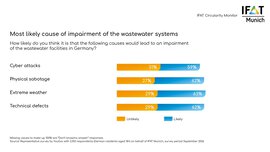
For many people in Germany, the security of water and wastewater systems has long been more than just a technical issue – as shown by the IFAT Circularity Monitor, a representative study conducted by YouGov on behalf of IFAT Munich:
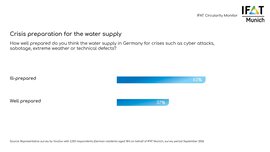
- According to the survey, 63 % believe Germany is poorly prepared for water supply crises,
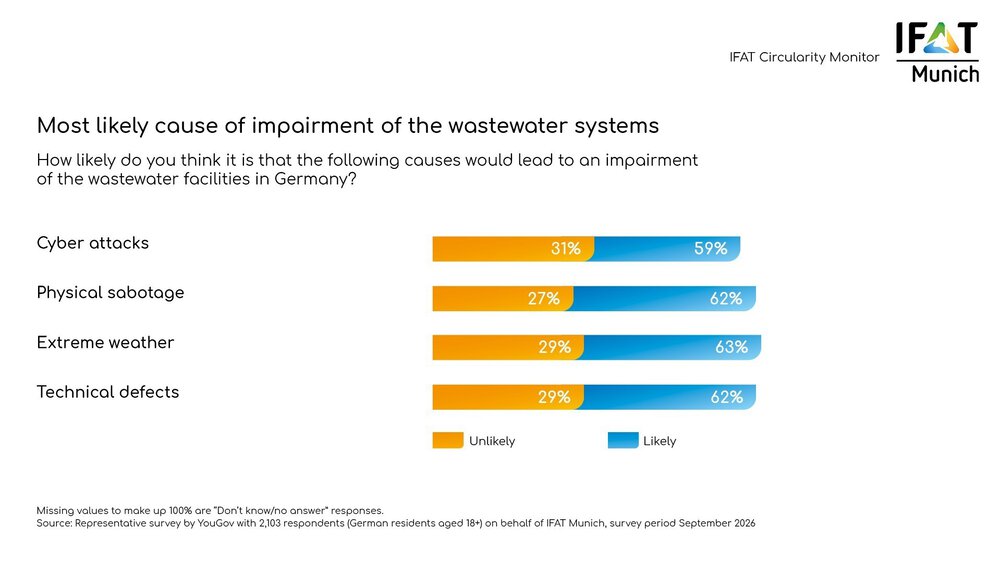
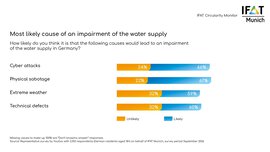
- with particular concern about sabotage (67%) and cyberattacks (66%).
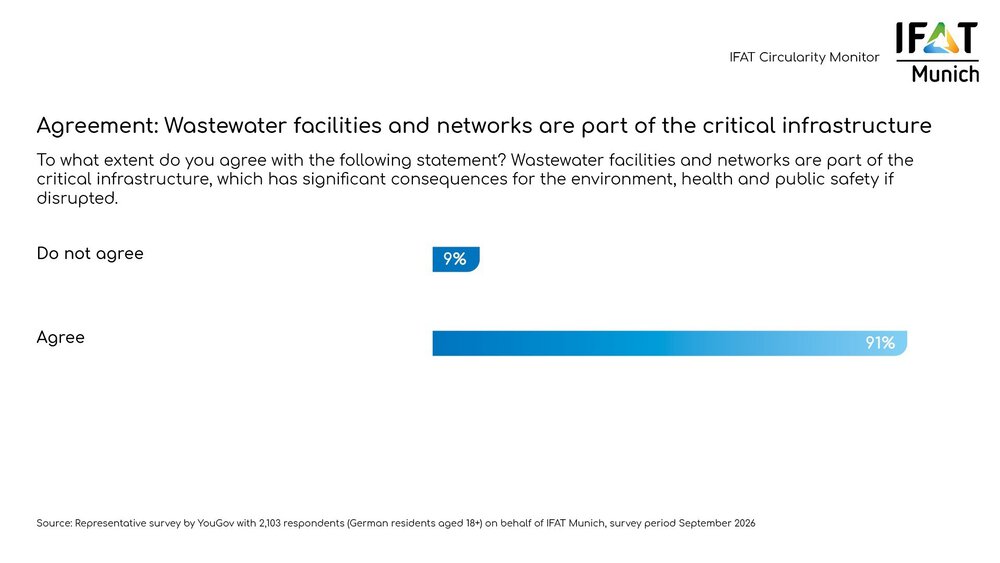
- A further 91 % view disruptions to wastewater treatment as a serious threat to the environment, public health and safety.
The results underline that water infrastructure is increasingly perceived as a security issue and is becoming a central topic in the debate on resilience and green defense.
IFAT Munich is responding to these developments by showcasing technologies and concepts designed to make water and wastewater systems more resilient and sustainable.
See the detailed results of the study here.
Video: Exhibition Director Philipp Eisenmann on circularity, green defense and the role of IFAT Munich
Interviews, analyses, and videos: Find fascinating background information on circularity
Read insightful articles on circularity, featuring analyses, interviews and background reports on key issues at IFAT Munich. The articles are published in the Süddeutsche Zeitung and cover topics ranging from the circular economy and water infrastructure to the geopolitical dimensions of resource security.
Overview of articles (this list will be updated with new publications)
“Germany's security begins at the recycling center”
A new study shows how the circular economy is linked to Germany's raw material security, and where there is still a need for education. 73% of Germans recognize its importance, but 83% feel poorly informed. Learn more about the security policy relevance of circularity.
Over 60 percent of Germans believe that water infrastructure is vulnerable to sabotage, cyberattacks, and extreme weather. A study by IFAT Munich illustrates how the concept of security is evolving and explains why water has become a strategic issue rather than merely a technical one.
Europe has technological potential but lacks a political framework. In an interview, ING Chief Economist Carsten Brzeski explains why the circular economy must become a key economic and security policy strategy and which three levers are now crucial.
Stay up to date on circularity
Every two weeks, the IFAT Munich LinkedIn newsletter explores key topics and events around the circular economy. Don't miss any updates and get the most important insights!