
Download PDF
204360
Final report
IFAT Munich 2026: Environmental technologies are becoming a global key industry
May 7, 2026
- Around 142,000 visitors from almost 160 countries and regions
- Record: 3,400 exhibitors from around 60 countries and regions
- Circularity is a must: Potential for a doubling of gross value added by 2045
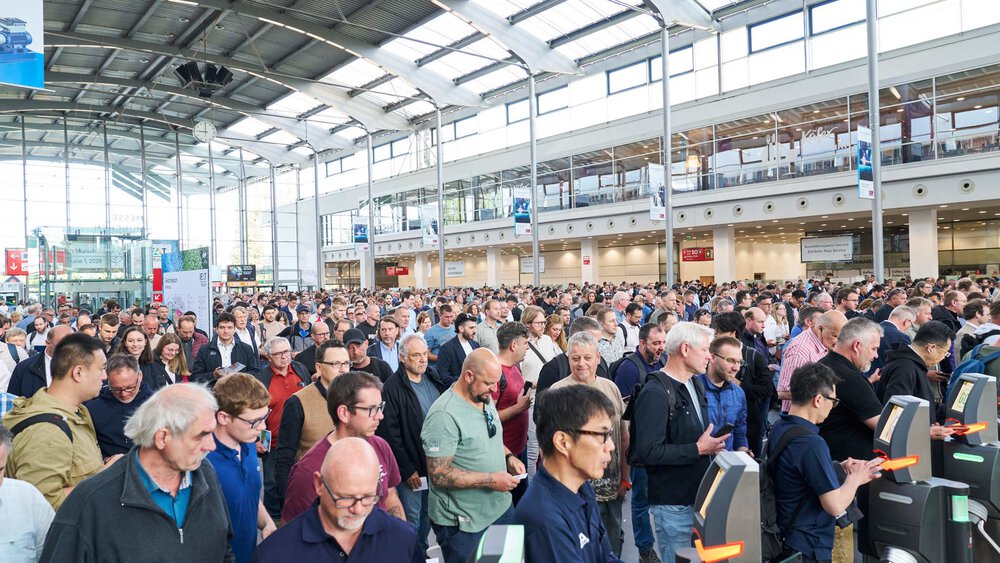
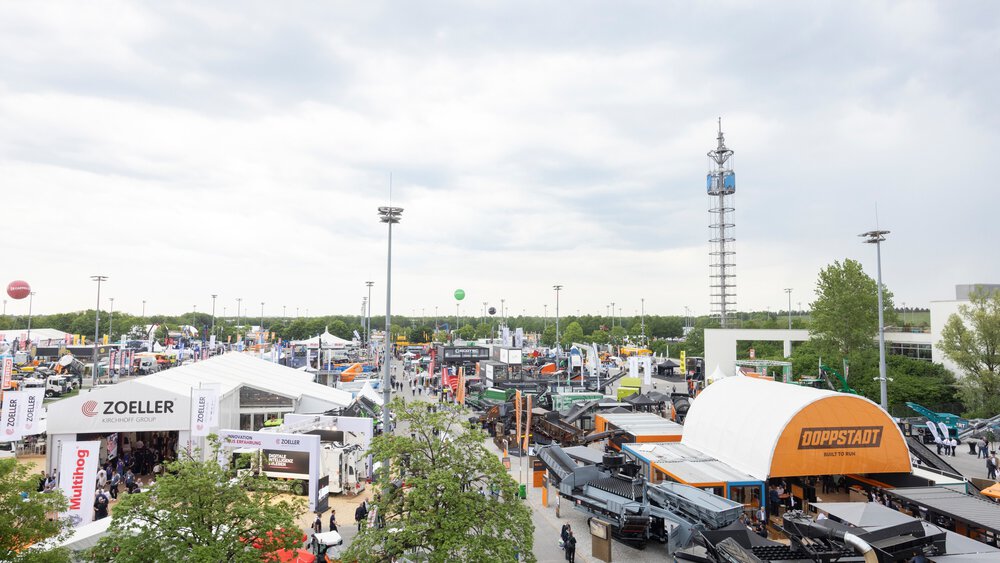
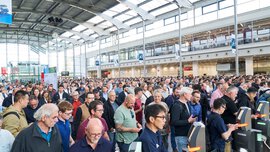
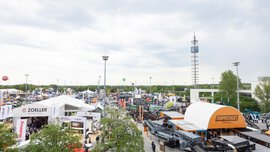
In its 60th anniversary year— since 1966, IFAT Munich has been the global meeting place for environmental technology industry —the world-leading trade fair is celebrating new record figures. Around 3,400 exhibitors and some 142,000 visitors attended the trade fair from May 4 to 7, 2026. Companies from around 60 countries and regions showcased innovative solutions for water, recycling, and circularity across 300,000 square meters—offering answers to some of the most pressing global challenges.
For 60 years now, IFAT Munich has been synonymous with innovation and inspiration. But never before in the past six decades has the strategic relevance of environmental technologies been as strikingly clear as it is today. In times of fragile supply chains and geopolitical tension, they offer solutions for more resilience and sovereignty.
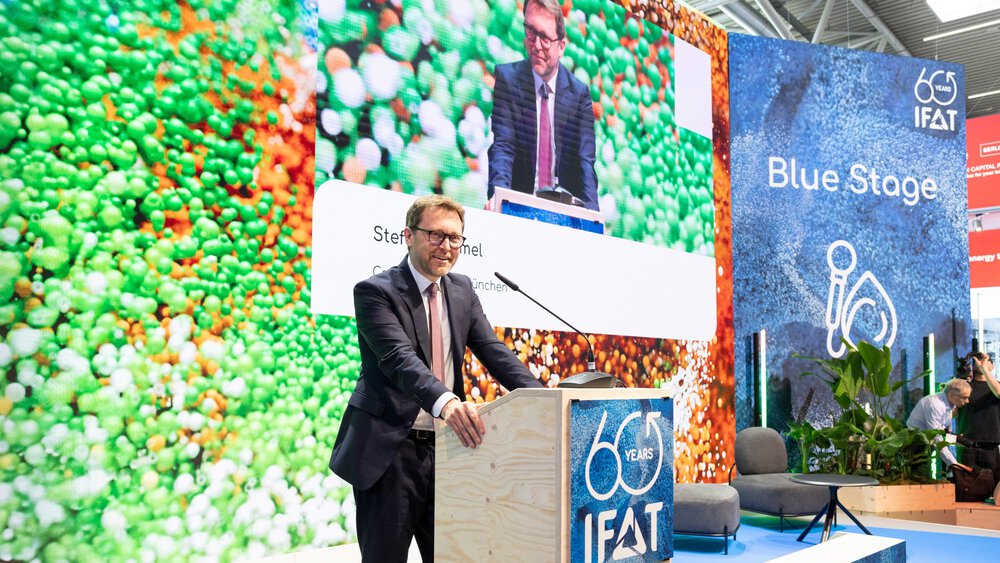
Stefan Rummel, CEO of Messe München, concludes: “The record participation at IFAT Munich 2026 clearly demonstrates that the circular economy and water management are of systemic importance and represent the next global key industry. This makes IFAT Munich all the more important as a platform. It enables crucial knowledge transfer and provides the industry with the visibility it needs to engage in dialogue with policymakers and help set the right course for the future.”
Platform for exchange between industry and policymakers
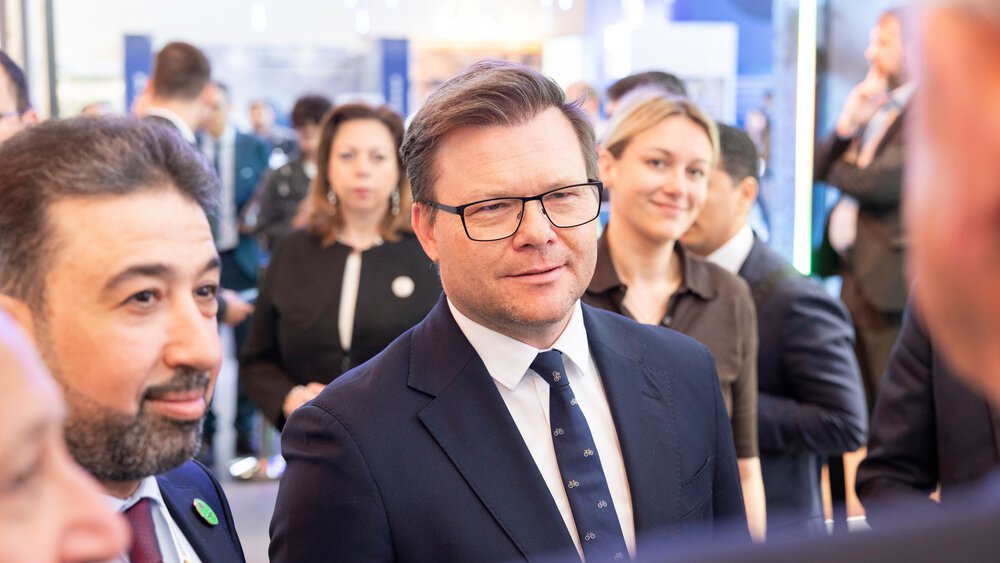
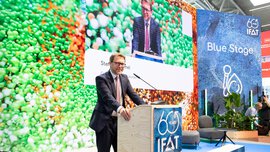
In addition to German state ministers and international ministerial delegations, the EU Commissioner for Environment, Water Resilience and a Competitive Circular Economy, Jessika Roswall, visited in 2026 to see the forward-looking solutions for water, recycling, and circularity for herself. At the trade fair, Germany’s Environment Minister Carsten Schneider stressed that environmental technologies were essential for sovereignty, security, and prosperity. “IFAT is the central platform for this important topic. This is where companies, policymakers, municipalities, and associations can network and coordinate their efforts.”
Dr. Johannes F. Kirchhoff, Chairman of the Advisory Board of IFAT Munich, added that the transformation to a circular and resource-efficient economy was a prerequisite for stability, raw material resilience, growth, and competitiveness. “IFAT Munich 2026 has impressively demonstrated how this change can be achieved in practice—solution-oriented, across sectors, and globally networked.”
Study on the Circular Economy demonstrates economic potential
A study conducted by Boston Consulting Group on behalf of the Federation of German Industries (BDI) highlights the significant economic potential of the circular economy. The study, supported by IFAT Munich, was presented at the world’s leading trade fair. According to the findings, circular gross value added in Germany could more than double from the current €60 billion to as much as €125 billion by 2045 — and this within existing industrial and value creation structures. Additional cumulative value creation could amount to as much as €880 billion by 2045. Recycling and reuse could replace between 20 and 40 percent of strategic raw material imports by 2045.
Closed material cycles for greater resource security
IFAT Munich 2026 was decisively shaped by the geopolitical and economic significance of the circular economy. The focus was on the efficient use of resources, closed material cycles, and reduced dependence on primary raw materials. “IFAT shows that we in Germany are capable of not only defending our position as a global leader in the circular economy, but even expanding it,” says Remondis Board member Thomas Conzendorf. “After all, exhibitor numbers are now higher than they were before the coronavirus pandemic, so we work in a real industry of the future. That should encourage us all to look to the future with confidence and optimism.”
Resilient water infrastructures get priority
The resilience of pipelines and water systems is also one of the major challenges of our time. What’s needed, on the one hand, is effective protection against targeted attacks on the infrastructure, such as physical sabotage or cyber attacks, but also resilient solutions in view of heavy rain, flooding, extreme heat, and water shortage. “IFAT Munich 2026 once again demonstrated impressively how valuable it is as the world’s leading trade fair for the exchange and further development of key future-oriented topics,” says Rainer Köhler, Chief Technology Officer at Huber SE. “The water and wastewater sector, as well as the waste management and recycling industry, play a key role in sustainably strengthening the circular economy and climate resilience. Water, energy, the environment, and climate are among the most pressing challenges of our time — and this is precisely where IFAT provides important momentum.”
Six decades of innovation, exchange, and growth
Despite the current energy crisis and geopolitical conflicts, the international share of exhibitors and visitors remains consistently high at over 50 percent. The top three exhibiting countries in 2026 after Germany were Italy, China, and the Netherlands. “In its 60th anniversary year, IFAT Munich not only impressively demonstrates how strongly it is internationally established, but also records peak figures and efficiency gains for both visitors and exhibitors despite a shortened duration,” says Philipp Eisenmann. “Contrary to the trend in many other industries, environmental technologies represent a significant growth market — and for six decades, IFAT Munich has been the central platform for it.”
The next IFAT Munich will be held at the exhibition center in Munich from May 29 to June 1, 2028.
Downloads
Belonging images

Matthias Glötzner
- PR Manager
+49 89 949-21483
+49 89 949-21483Write an e-mail
Write an e-mail